WW DIGI 2025: Pushing the Limits with LX7I Superstation (Flashback)
FT4, FT8, 24 hours of nonstop action, and a new European record.
Here we go again — WW DIGI 2025! The annual FT4 and FT8 contest was another opportunity to push the limits of digital contesting, and once again, I had the pleasure of operating from the outstanding LX7I Superstation, thanks to Philippe for generously making his station available to me.
Everything worked flawlessly, and I was highly motivated to make the most of this opportunity. I spent quite some time preparing the setup, fine-tuning the operating position, and getting everything ready for 24 hours of serious digital contesting.
The Operating Setup
A comfortable and efficient operating position makes a real difference during a long contest. This time, I arranged the monitors as follows, from left to right:
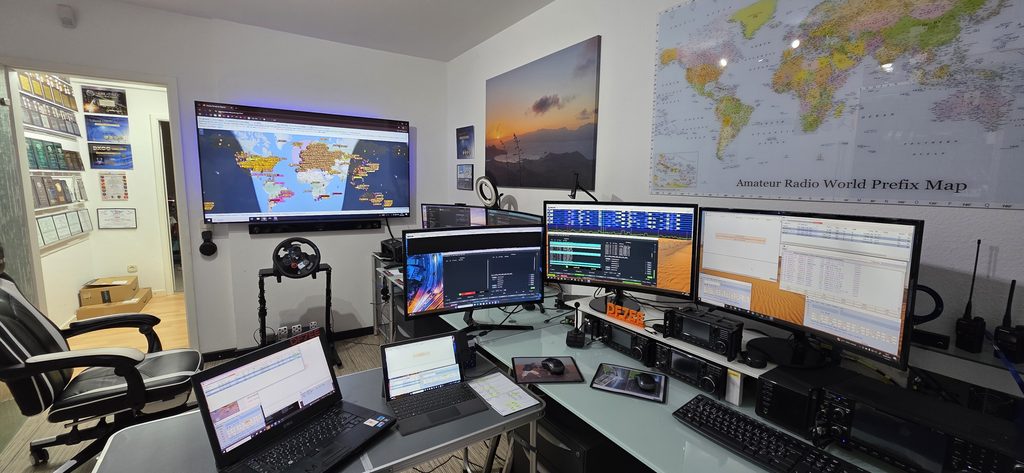
- Notebook: Administration PC running N1MM Logger+
- Surface screen: LX7I FlexRadio 2
- 27-inch monitor: Operating position for Radio 1
- 27-inch monitor: Operating position for Radio 2
- 27-inch monitor: LX7I FlexRadio 2
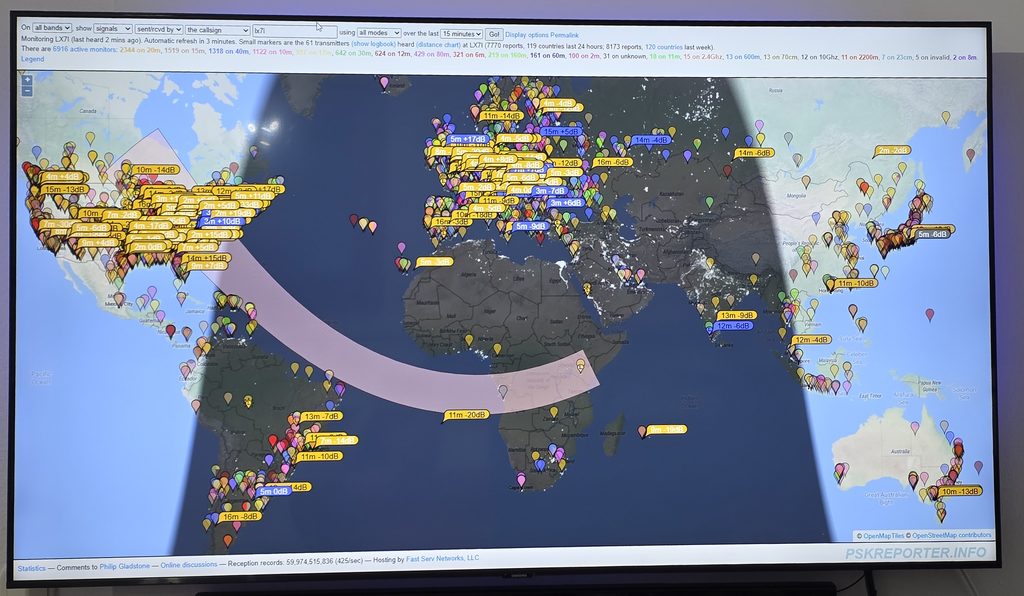
- Wall-mounted flat screen: Real-time PSK Reporter activity
I also moved the WSJT-X screen on the right next to the other WSJT-X screen. A small change, but a worthwhile improvement in ergonomics when spending an entire day in front of the screens.
With the station ready and everything in place, it was time to get on the air!
The Challenge: Competing from Europe
Congratulations to Holger, ZL3IO, for his fantastic score and for setting such a high benchmark!
Looking at the previous year’s results, I quickly realized what it might take to compete at the top level: around 1,500 QSOs and 900,000 points — or even more.
But how do you achieve that from Europe, where distance-based scoring puts us at a disadvantage compared with stations in other parts of the world?
My strategy was clear: focus heavily on FT4 to maximize the QSO rate.
FT4, FT8, and the Perfect Flow
With my call sign being somewhat uncommon in FT4 and FT8, the station attracted a steady stream of callers. Throughout the entire 24-hour contest, there wasn’t a single minute without someone calling!
I was genuinely amazed by the propagation, the number of callers, and the QSO rates. For much of the contest, everything seemed to fall into place. Contacts kept coming, the rate remained high, and I experienced what I can only describe as the perfect flow.
Before the contest, I wasn’t entirely convinced that approaching 2,000 QSOs in 24 hours was realistic. Once the rate started building, however, that target no longer seemed so far-fetched.
One important lesson stood out above everything else:
Only click callsigns that include a locator!
It sounds simple, but when the rate is high and callers are coming in continuously, it’s easy to waste precious time on incomplete calls. Every second counts when you’re trying to maximize the final score.
The Final Hours
As the contest entered its final hours, concentration became increasingly difficult. I decided to spend more time on FT8 rather than continuing with FT4.
The slower pace was easier to manage when fatigue started to set in, although it wasn’t the best choice for maximizing the final score.
After 24 hours of intensive operating, the mental and physical effort was definitely noticeable. Still, the experience was fantastic, and the station had performed exceptionally well.
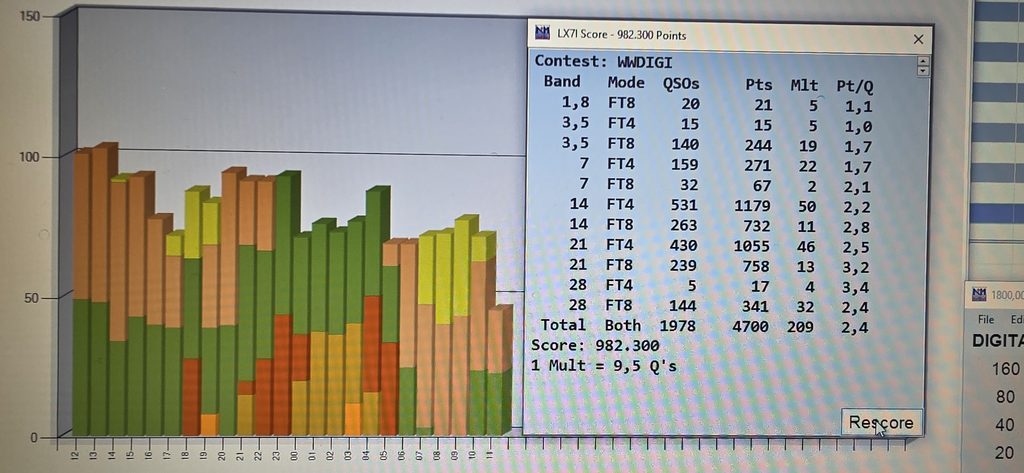
Final Results — December 23, 2025
The final scores were published on December 23, 2025.
Unfortunately, even almost doubling the number of QSOs isn’t enough to overcome Europe’s disadvantage in a distance-based scoring system.
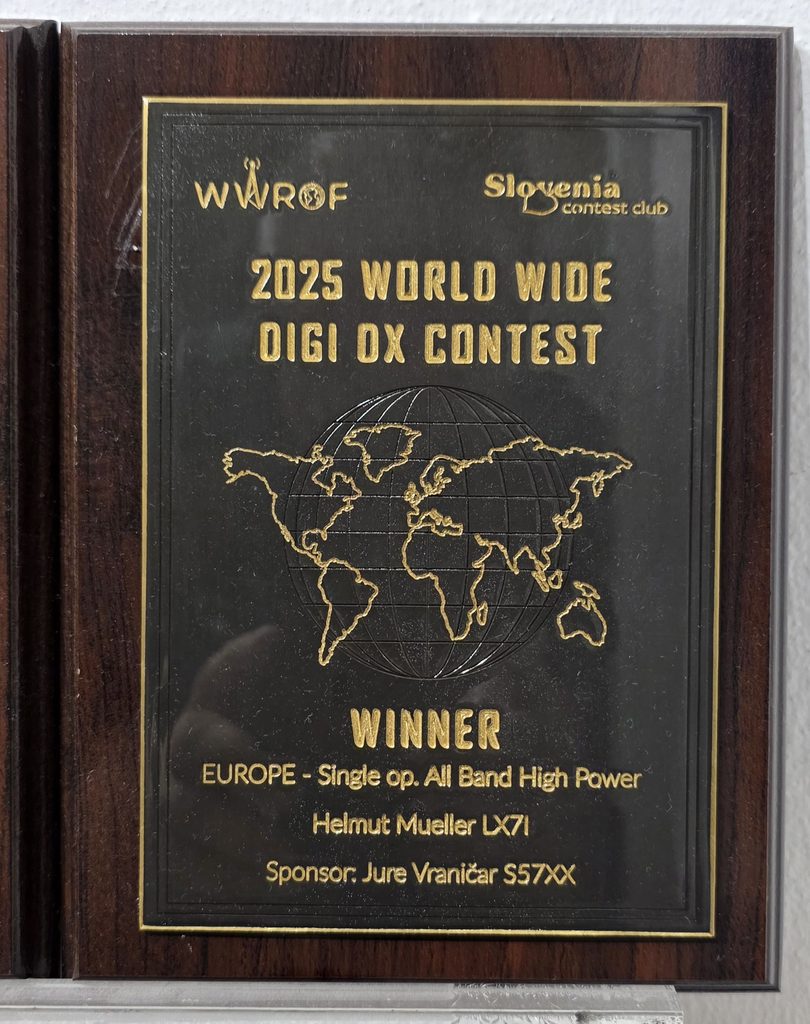
Nevertheless, I’m delighted with the outcome. The contest brought me a new European record and a mention in the official results article — a very satisfying reward for all the preparation and effort!
Would I Do It Again?
If you’d asked me within 24 hours of finishing the contest, my answer would have been an emphatic:
NO!
I was absolutely exhausted. 😄
But that’s the nature of a 24-hour contest at this intensity. You push yourself, learn a lot, enjoy some incredible runs, and finish wondering how you managed to keep going for so long.
A big thank you to Philippe for letting me use the LX7I Superstation again, and thanks to everyone who called me during the contest. I’m sorry to those I couldn’t work — especially anyone who called without a locator!
And, of course, congratulations again to Holger, ZL3IO, and all the other competitors who made WW DIGI 2025 such a great challenge.
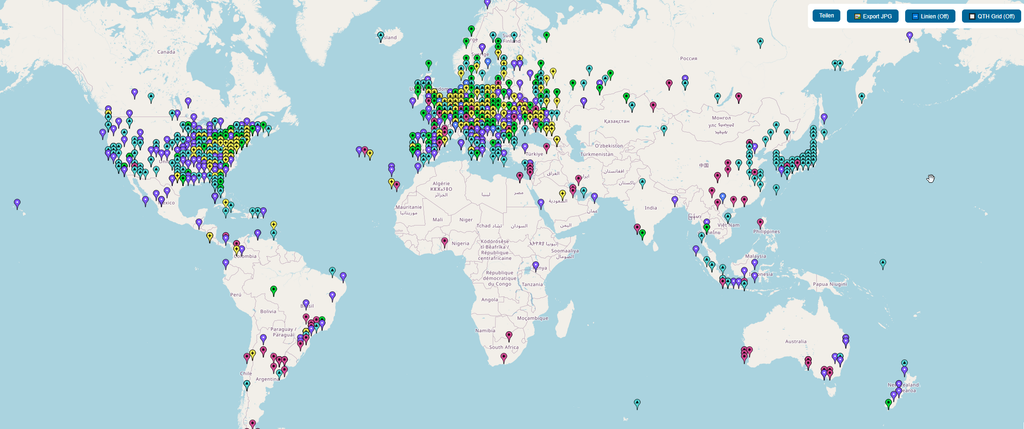
The map below shows the geographical spread of the contacts.
73 and see you in the next contest!
Helmut, DF7EE